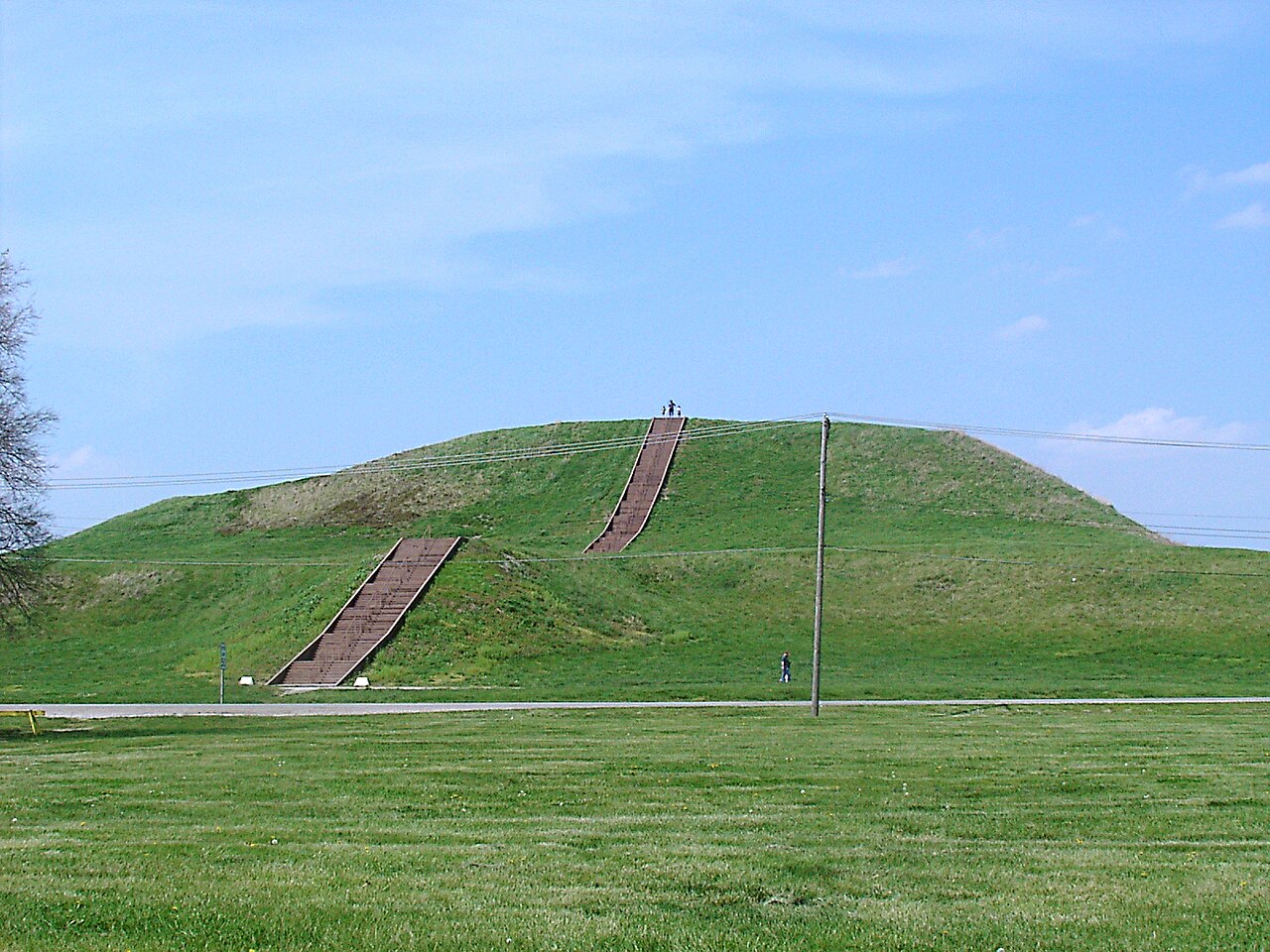
Cahokia was a large Mississippian settlement in what is now Illinois, across the Mississippi River from present-day St. Louis. At its height between roughly 1050 and 1150, its population may have reached ten to twenty thousand. Farming, exchange, political authority and ceremonial life supported an extensive urban landscape of homes, plazas and earthworks. Monks Mound dominates the surviving site, rising in terraces above the surrounding ground. Other mounds had different functions, including foundations for public buildings and places of burial. A circle of wooden posts, commonly called Woodhenge, provides evidence of attention to the solar calendar. These features belong to a connected settlement rather than a collection of isolated monuments. Archaeology helps reconstruct its organization while also revealing the limits of what survives. Preserving the earthworks protects both material evidence and the memory of a major Indigenous center.
Place & context
Living use
It is visited as a state historic site and UNESCO-listed cultural landscape.
Place & context
Visiting with care
Consult the site’s official guidance before travel. Respect worship, photography restrictions and local custodians.
Approximate orientation; confirm locally before visiting
Presence · An optional practice
A moment with this place.
Read, listen, or simply pause. Begin wherever you are.
◎
Read about this place from wherever you are. Imagine the relationships between the earthworks, daily life and the wider landscape. What changes when you think of this as a lived city? You may pause quietly and breathe naturally, without changing or holding your breath.
A contemporary editorial invitation, not a local ritual instruction. Participation is optional; stop if uncomfortable. Check local access and custodians’ guidance before a visit.
Further profile layers will be added as sources are reviewed.
Nearby & related places
Start in the same state or country, then explore shared traditions and themes. Map references help order the suggestions; they may represent communities rather than entrances.