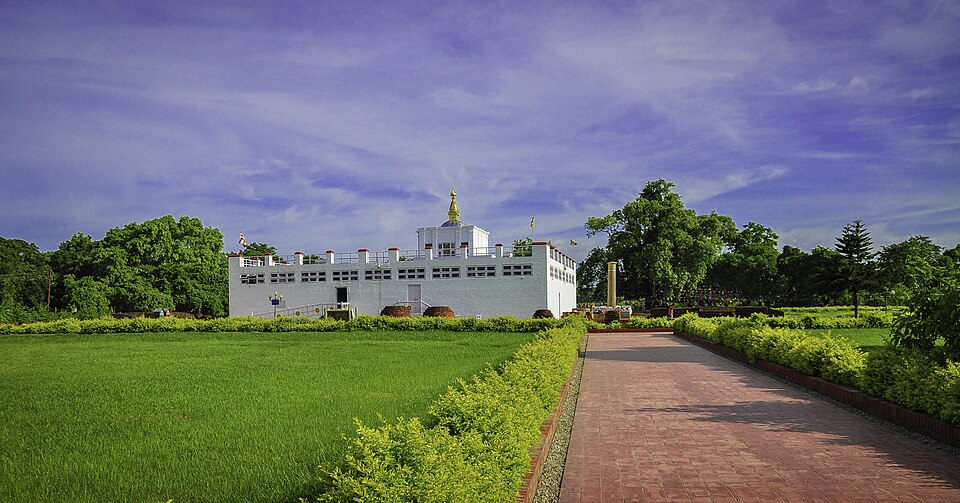
Lumbini brings Buddhist remembrance of the Buddha’s birthplace into contact with a long archaeological record. Ashoka’s inscribed pillar marks an imperial pilgrimage in the third century BCE. Around the Maya Devi Temple, successive brick structures, monastery remains and stupas record centuries of building and devotion. The small World Heritage property sits within a much wider pilgrimage landscape. Its archaeological layers deserve attention alongside the modern monasteries: they show how generations have returned to, marked and cared for this place.
Place & context
Living use
The Lumbini Development Trust manages the heritage property. UNESCO describes conservation of archaeological remains and continued pilgrimage as intertwined responsibilities; current access requires a separate check.
Place & context
Visiting with care
Check current official travel guidance and the custodian’s access rules before planning a visit. Respect worship, closures, private spaces and photography restrictions. This profile does not confirm that entry is currently possible.
Source trail
Evidence & location
Original introductory synthesis reviewed against UNESCO World Heritage documentation on 2026-10-31. Current access is not verified.
UNESCO World Heritage property reference point, converted from the published degrees/minutes/seconds coordinate; not a surveyed entrance, route or boundary.
Pilgrimage documented by Ashoka’s third-century BCE pillar; later monastic remains
Location precision
UNESCO World Heritage property reference point, converted from the published degrees/minutes/seconds coordinate; not a surveyed entrance, route or boundary.
Presence · An optional practice
A moment with this place.
Read, listen, or simply pause. Begin wherever you are.
◎
Read the story of Lumbini. Notice one detail you would like to understand better, and consider the people for whom this place matters. You may pause quietly and breathe naturally, without changing or holding your breath.
A contemporary editorial invitation, not a local ritual instruction. Participation is optional; stop if uncomfortable. Check local access and custodians’ guidance before a visit.
Further profile layers will be added as sources are reviewed.
Nearby & related places
Start in the same state or country, then explore shared traditions and themes. Map references help order the suggestions; they may represent communities rather than entrances.