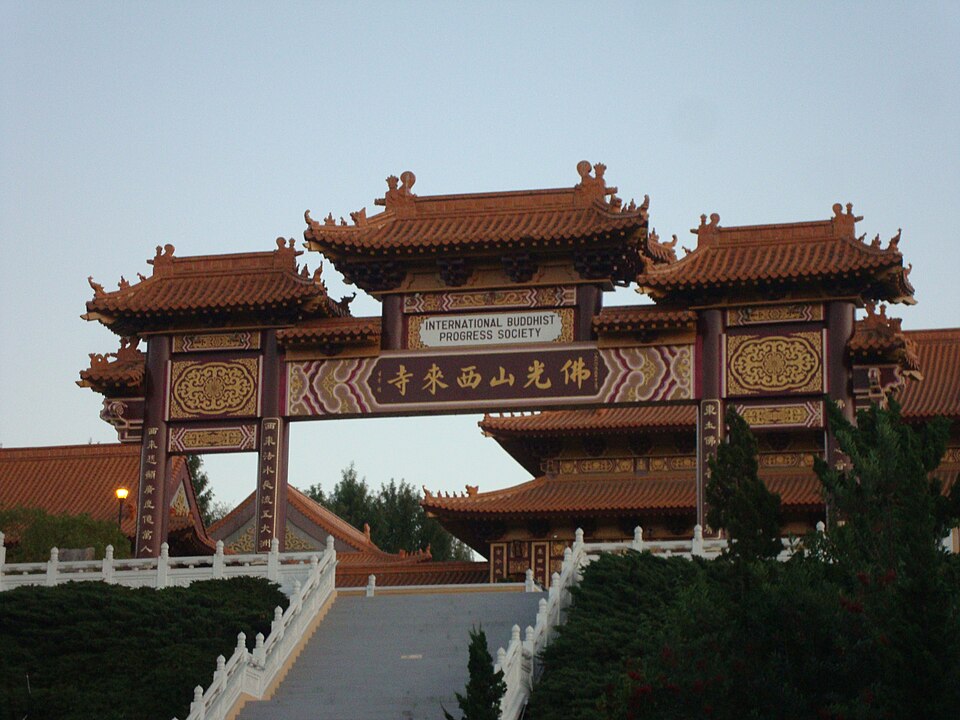
Hsi Lai Temple introduces Humanistic Buddhism through worship, education and cultural exchange in southern California. Its name expresses the movement of Buddhist teaching toward the West. The temple belongs to Fo Guang Shan, the Buddhist organization founded in Taiwan in 1967 by Master Hsing Yun. In its own account, the community traces its religious inheritance through the Linji Chan tradition within Mahayana Buddhism. Humanistic Buddhism brings religious cultivation into everyday relationships and social life, connecting practice with learning, service and the arts. Hsi Lai's role therefore extends beyond its architecture: it is also a place where monastic and lay communities encounter visitors and share an understanding of Buddhist life. The temple's emphasis on cultural activity and dialogue helps explain its place in the atlas as a living religious institution shaped by both inherited tradition and contemporary migration.
Place & context
Living use
The religious community gives this place its purpose through worship, gathering or study. Public visiting arrangements and participation in services are separate questions; consult the source before planning a visit.
Place & context
Visiting with care
Check the custodian’s current visitor guidance before travel. Respect worship, restricted areas and photography rules. Do not disturb graves, offerings or archaeological features.
Source trail
Evidence & location
Original introductory profile. Identity and significance checked against the linked source; access and precise site coordinates are separate research items.
Community orientation only: Hacienda Heights, California; rounded US Census internal point. This is not the site, trailhead or entrance.
Community orientation only: Hacienda Heights, California; rounded US Census internal point. This is not the site, trailhead or entrance.
Presence · An optional practice
A moment with this place.
Read, listen, or simply pause. Begin wherever you are.
◎
Read the place’s story and notice one detail you would like to understand better. Consider the people who care for it. You may pause quietly and breathe naturally.
A contemporary editorial invitation, not a local ritual instruction. Participation is optional; stop if uncomfortable. Check local access and custodians’ guidance before a visit.
Further profile layers will be added as sources are reviewed.
Nearby & related places
Start in the same state or country, then explore shared traditions and themes. Map references help order the suggestions; they may represent communities rather than entrances.