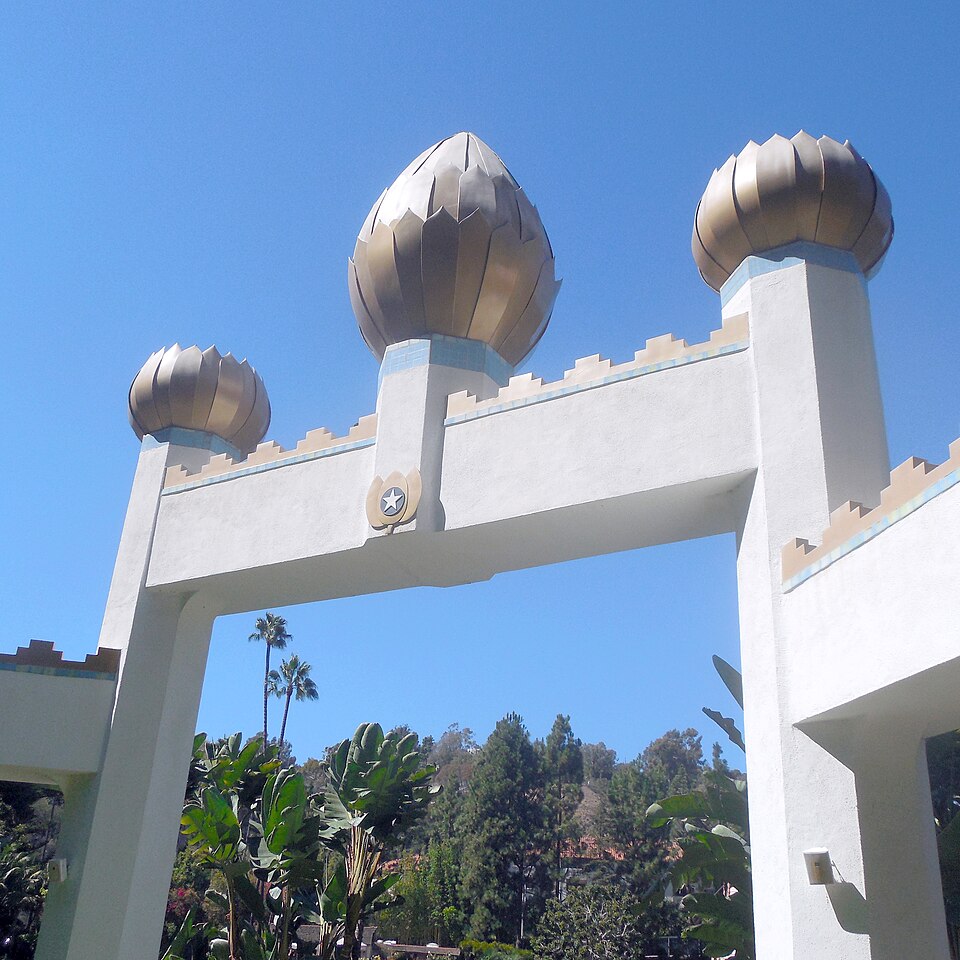
Lake Shrine occupies a landscape with an unusual history before it became a religious sanctuary. The area belonged to the early film-making landscape of Inceville. In 1927, an unfinished earthmoving project left a basin that filled from natural springs, forming Lake Santa Ynez. During the 1940s, Everett McElroy developed gardens around the water and introduced structures including a houseboat and a working waterwheel. These earlier layers helped shape the setting later acquired by Paramahansa Yogananda with support from benefactors. Yogananda developed the property as a place of contemplation and an outdoor shrine honoring the world's religions. Its religious identity is therefore inseparable from a deliberately cultivated garden and a landscape transformed over time. The fellowship's account offers a useful way to understand the sanctuary through its own institutional memory, while allowing visitors to distinguish that history from their personal response to the place.
Place & context
Living use
The religious community gives this place its purpose through worship, gathering or study. Public visiting arrangements and participation in services are separate questions; consult the source before planning a visit.
Place & context
Visiting with care
The operator uses reservations for the meditation gardens. Check the official visitor page for the current arrangements before travelling.
Source trail
Evidence & location
Original introductory profile. Identity and significance checked against the linked source; access and precise site coordinates are separate research items.
Community orientation only: Los Angeles, California; rounded US Census internal point. This is not the site, trailhead or entrance.
Community orientation only: Los Angeles, California; rounded US Census internal point. This is not the site, trailhead or entrance.
Presence · An optional practice
A moment with this place.
Read, listen, or simply pause. Begin wherever you are.
◎
Read the place’s story and notice one detail you would like to understand better. Consider the people who care for it. You may pause quietly and breathe naturally.
A contemporary editorial invitation, not a local ritual instruction. Participation is optional; stop if uncomfortable. Check local access and custodians’ guidance before a visit.
Further profile layers will be added as sources are reviewed.
Nearby & related places
Start in the same state or country, then explore shared traditions and themes. Map references help order the suggestions; they may represent communities rather than entrances.