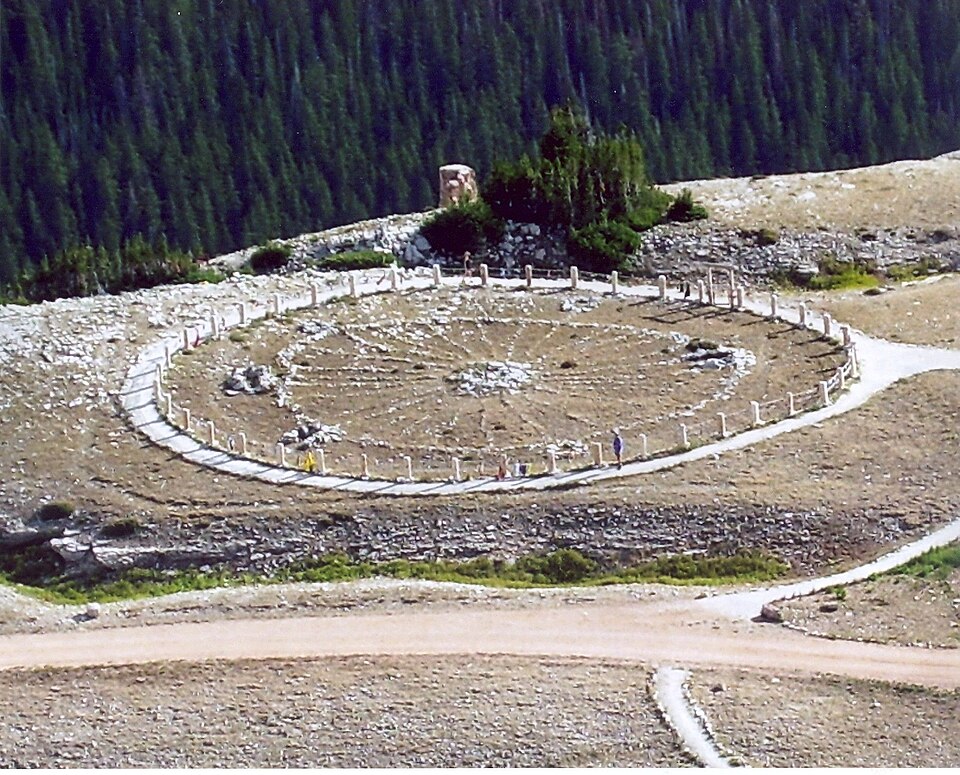
The Medicine Wheel lies high on Medicine Mountain in the Bighorn landscape of Wyoming. A Forest Service synthesis describes an arrangement of limestone stones with a central cairn, twenty-eight radiating alignments and stone enclosures around its edge. The structure is approximately eighty feet across. Its significance extends beyond that visible arrangement: the mountain and wheel are associated with numerous Native peoples, including the Crow, Arapaho, Cheyenne, Shoshone and other regional nations. Recognizing those relationships is essential to understanding why the place is both a protected historic landmark and a sacred landscape. Measurements of its form describe what can be observed; they do not, by themselves, authorize a universal explanation of its religious meaning. The atlas therefore introduces the documented physical setting and cultural connections while leaving ceremonial knowledge and interpretations with the communities to which they belong.
Place & context
Living use
A living community sustains this place through worship, remembrance and gathering. Its religious identity is more than its architecture. Ask the community about visiting and participation in services.
Place & context
Visiting with care
Respect ceremonial use and all seasonal access restrictions. Consult the responsible land manager before travelling to this high-elevation site.
Source trail
Evidence & location
Original introductory profile. Identity and significance checked against the linked source; access and precise site coordinates are separate research items.
Community orientation only: Lovell, Wyoming; rounded US Census internal point. This is not the site, trailhead or entrance.
Community orientation only: Lovell, Wyoming; rounded US Census internal point. This is not the site, trailhead or entrance.
Presence · An optional practice
A moment with this place.
Read, listen, or simply pause. Begin wherever you are.
◎
Read the place’s story and notice one detail you would like to understand better. Consider the people who care for it. You may pause quietly and breathe naturally.
A contemporary editorial invitation, not a local ritual instruction. Participation is optional; stop if uncomfortable. Check local access and custodians’ guidance before a visit.
Further profile layers will be added as sources are reviewed.
Nearby & related places
Start in the same state or country, then explore shared traditions and themes. Map references help order the suggestions; they may represent communities rather than entrances.