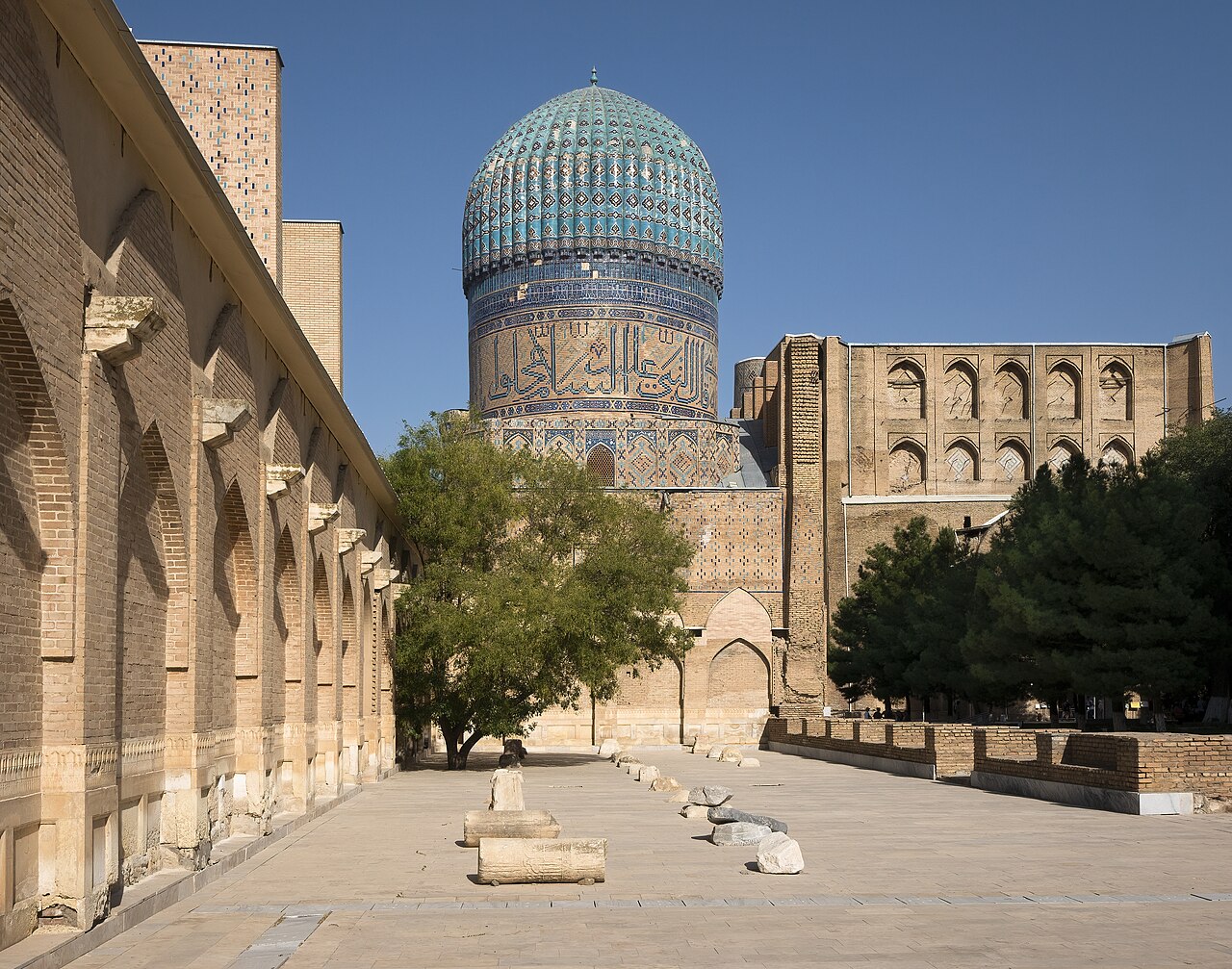
Bibi-Khanym Mosque interior, Samarkand (мечеть Биби-Ханум, Северный зал мечети).jpg · Petar Milošević · CC BY-SA 4.0
Place & context
History
Bibi-Khanym Mosque expresses the scale of Timur's ambitions for Samarkand. Commissioned at the end of the fourteenth century, it was built between 1399 and 1404 following his campaign in India. The mosque's familiar name recalls Saray Mulk Khanym, Timur's senior wife. Uzbekistan's tourism authority describes the complex as an immense congregational setting, organized around a courtyard with a monumental entrance, the principal mosque and smaller buildings. Marble carving, painted decoration and tilework joined architectural scale to highly skilled surface design. Craftspeople drawn from different regions contributed to the enterprise, placing the mosque within the wider movement of artistic knowledge under Timurid rule. Its history invites attention to the relationship between worship and imperial patronage. The building is a religious monument, but also a record of political power expressed through materials, labor and the transformation of an urban center.
Place & context
Living use
Today it is encountered as a restored monument, historic mosque space, and symbol of Timurid spiritual-political imagination.
Place & context
Visiting with care
Consult the site’s official guidance before travel. Respect worship, photography restrictions and local custodians.
Approximate orientation; confirm locally before visiting
Presence · An optional practice
A moment with this place.
Read, listen, or simply pause. Begin wherever you are.
◎
Read about this place from wherever you are. Read about what survives and what has been restored. What does care for an inherited place ask of each generation? You may pause quietly and breathe naturally, without changing or holding your breath.
A contemporary editorial invitation, not a local ritual instruction. Participation is optional; stop if uncomfortable. Check local access and custodians’ guidance before a visit.
Further profile layers will be added as sources are reviewed.
Nearby & related places
Start in the same state or country, then explore shared traditions and themes. Map references help order the suggestions; they may represent communities rather than entrances.
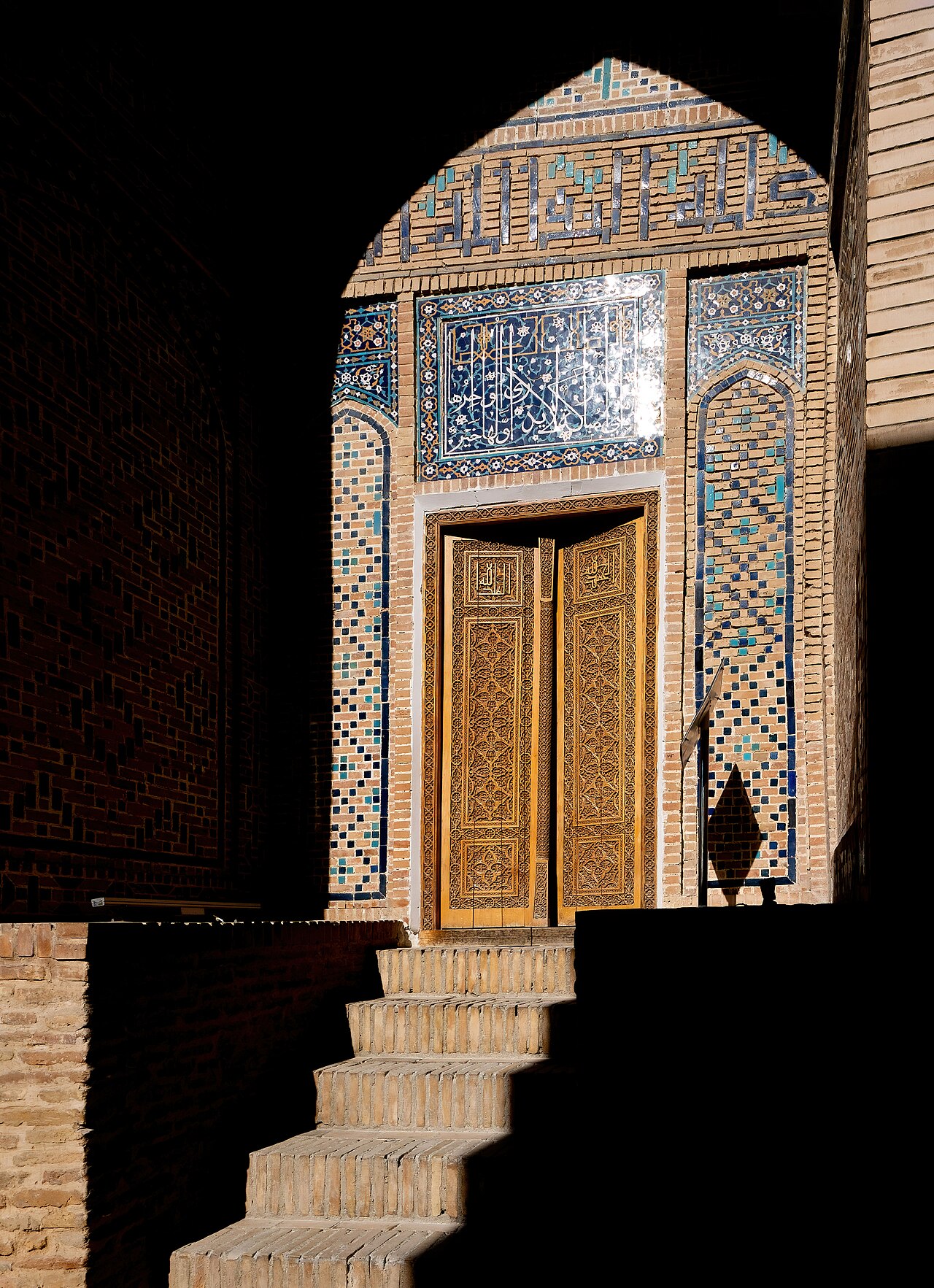
Мавзолей эмира Бурундука, Самарканд (Amir Burunduk Mausoleum, Shah-i-Zinda, Samarkand).jpg · Petar Milošević · CC BY-SA 4.0