Uzbekistan · Necropolis

Shah-i-Zinda

A luminous necropolis in Samarkand connected with the legend of Qutham ibn Abbas and layered with centuries of Timurid devotional architecture.

Samarkand, Uzbekistan

Ancestral memoryAwePrayer
A moment with this place ↓
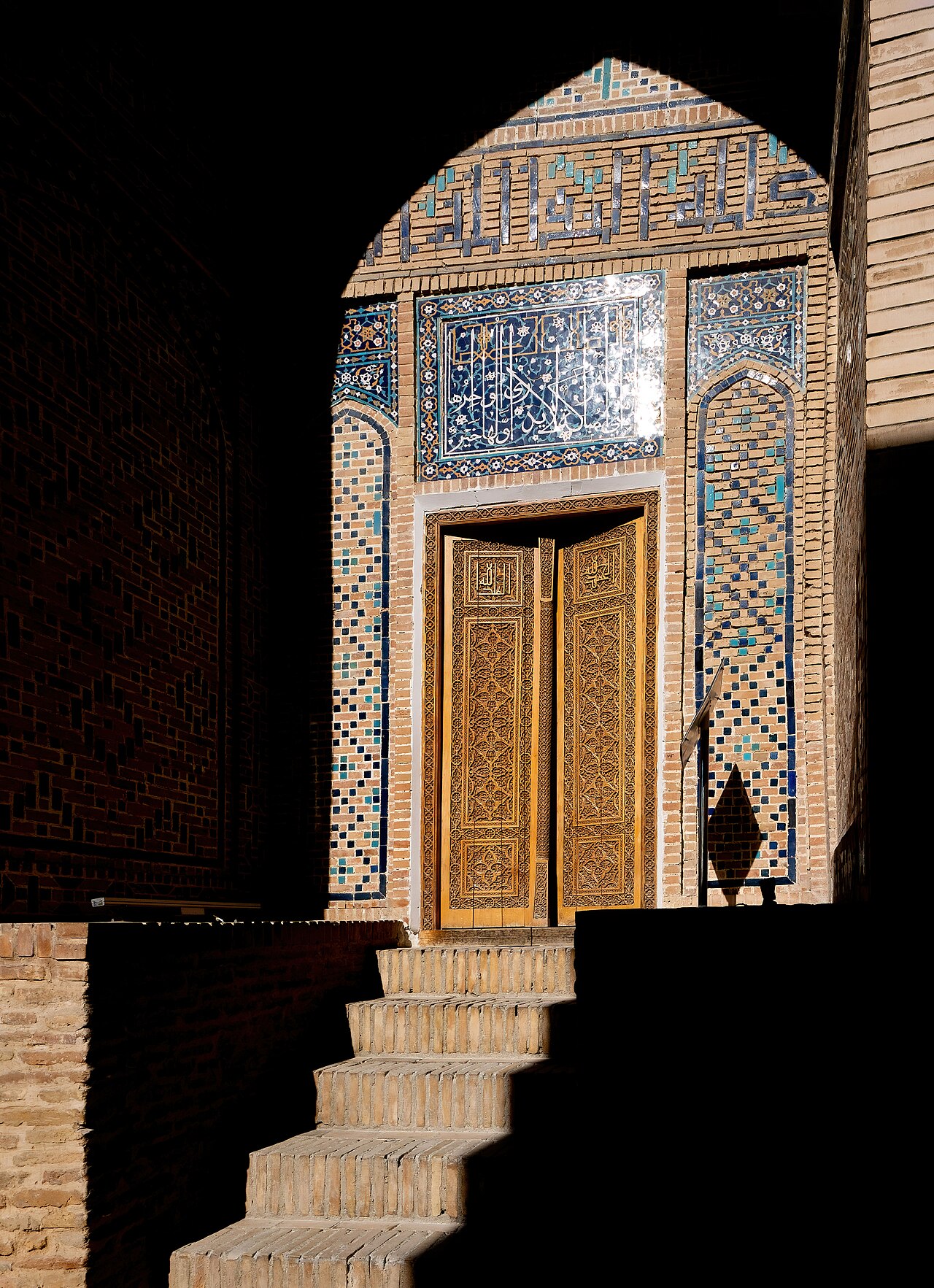
Enterance to Amir Burunduk Mausoleum, Shah-i-Zinda, Samarkand, Uzbekistan
Мавзолей эмира Бурундука, Самарканд (Amir Burunduk Mausoleum, Shah-i-Zinda, Samarkand).jpg · Petar Milošević · CC BY-SA 4.0

Place & context

History

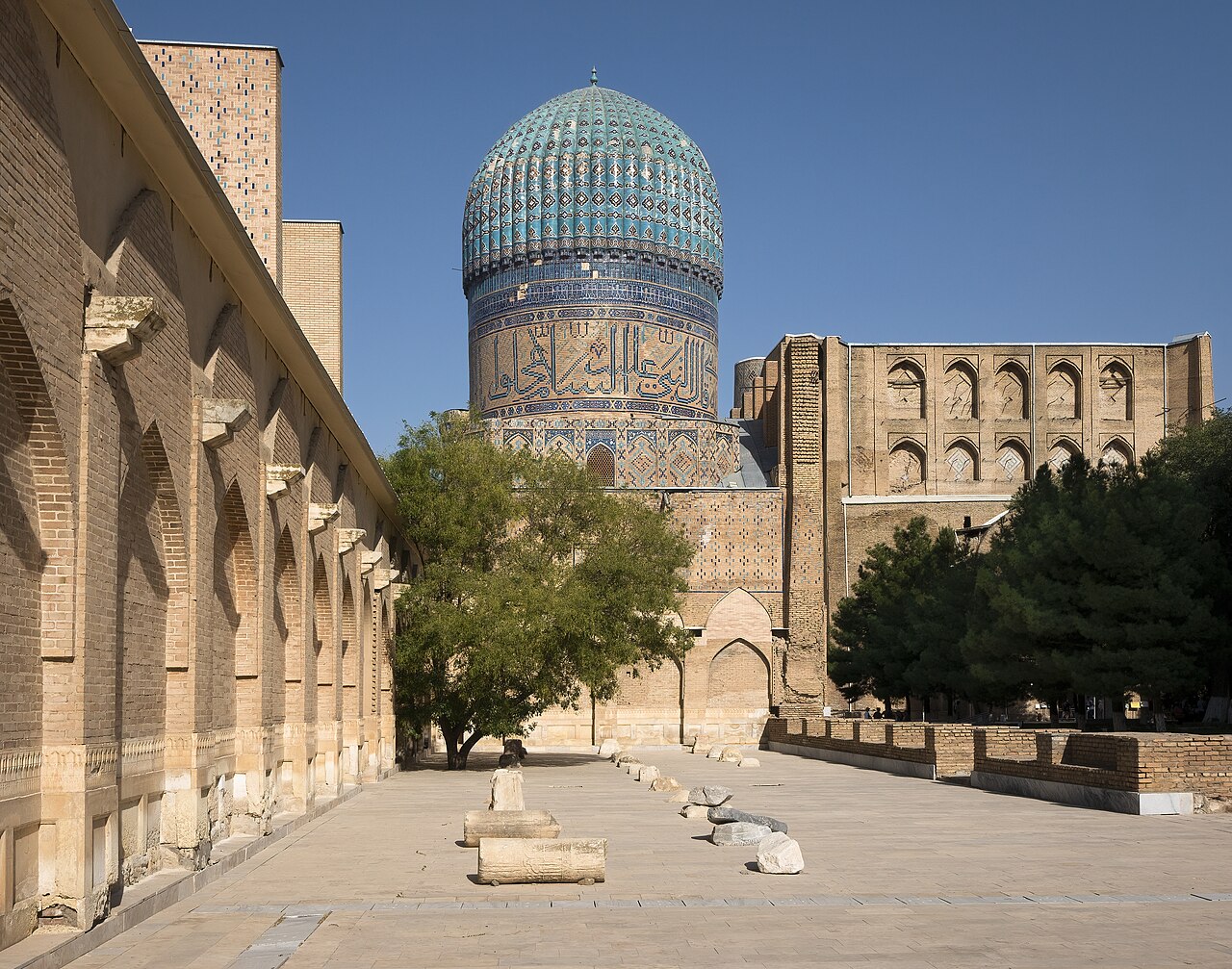
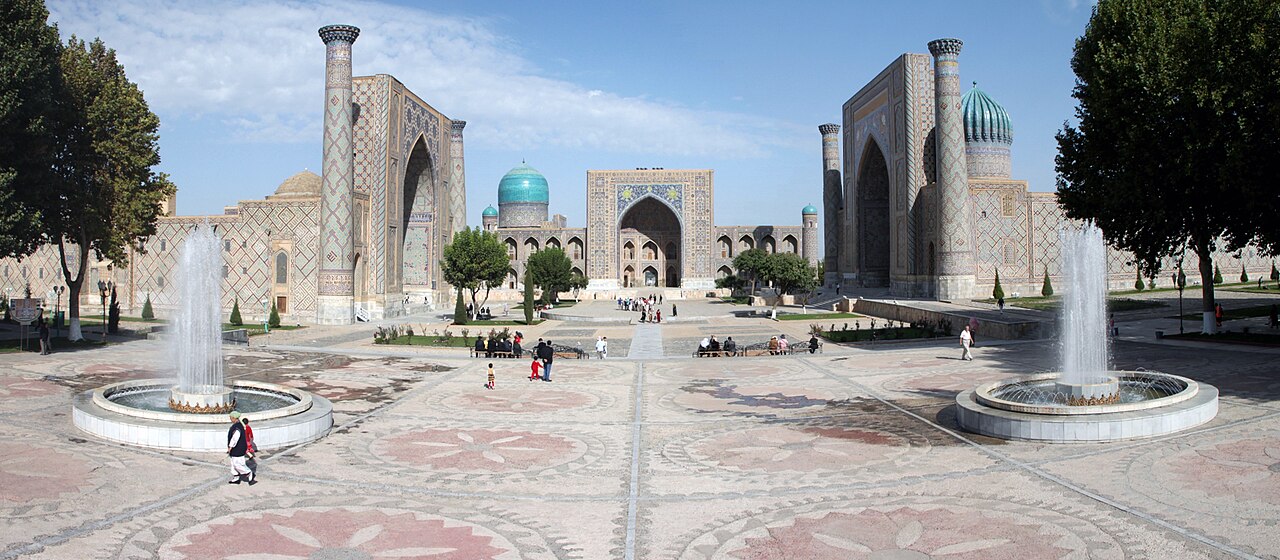
Shah-i-Zinda brings pilgrimage and funerary architecture together in a sequence of monuments in Samarkand. Its devotional identity is associated with Qusam ibn Abbas, remembered as a cousin of the Prophet Muhammad and a preacher of Islam. A local religious narrative tells of his escape from an attack through a well and his continued life in paradise. That story helps explain the site's name and reverence, but belongs to sacred tradition rather than a verified account of an event. Over many generations, rulers and other patrons sought burial close to the revered figure. The surviving ensemble includes monuments from different periods, with blue and turquoise tilework creating a powerful visual continuity. Its historical depth lies in those successive acts of remembrance and patronage. A visitor encounters both accomplished architecture and an enduring place of Muslim devotion, whose meaning cannot be reduced to its decorative surfaces.
Place & context

Living use

It is used for pilgrimage, prayer, ancestral reflection, architecture study, and sacred travel through Samarkand.

Place & context

Visiting with care

Consult the site’s official guidance before travel. Respect worship, photography restrictions and local custodians.

Tradition
Islamic pilgrimage and Timurid sacred architecture
Period
11th-15th centuries, with later additions
Location precision
Approximate orientation; confirm locally before visiting

Presence · An optional practice

A moment with this place.

Read, listen, or simply pause. Begin wherever you are.

Read about this place from wherever you are. Look closely at the tilework and thresholds. Consider how names, beauty and memory meet in a place of remembrance. You may pause quietly and breathe naturally, without changing or holding your breath.

A contemporary editorial invitation, not a local ritual instruction. Participation is optional; stop if uncomfortable. Check local access and custodians’ guidance before a visit.

Explore the Codex profile Symbol, sound & personal meaning

This optional layer offers contemporary spiritual interpretations. It sits alongside the place’s history and living traditions; it does not describe measured properties of the site.

Breath phase · Symbolic association

Heh · Rest

Integration — An invitation to stillness and reflection.

Interpretation: Founder’s Codex framework.

Listening palette

A space to listen.

Founder-selected synthetic tones. Choose one, or stay with silence.

Silent. Select Play to begin a 30-second tone.

Hz describes the sound being played, not a natural site frequency or a promised effect. No audio starts automatically.

Contemporary sigil

A return to stillness.

A central spiral enclosed by a diamond and surrounded by four arcs, representing a return to stillness.

Founder’s concept, drawn for Sacred Earth Map. A contemporary illustration; not an attested local emblem.

How to read the Codex layer →