Place & context
History
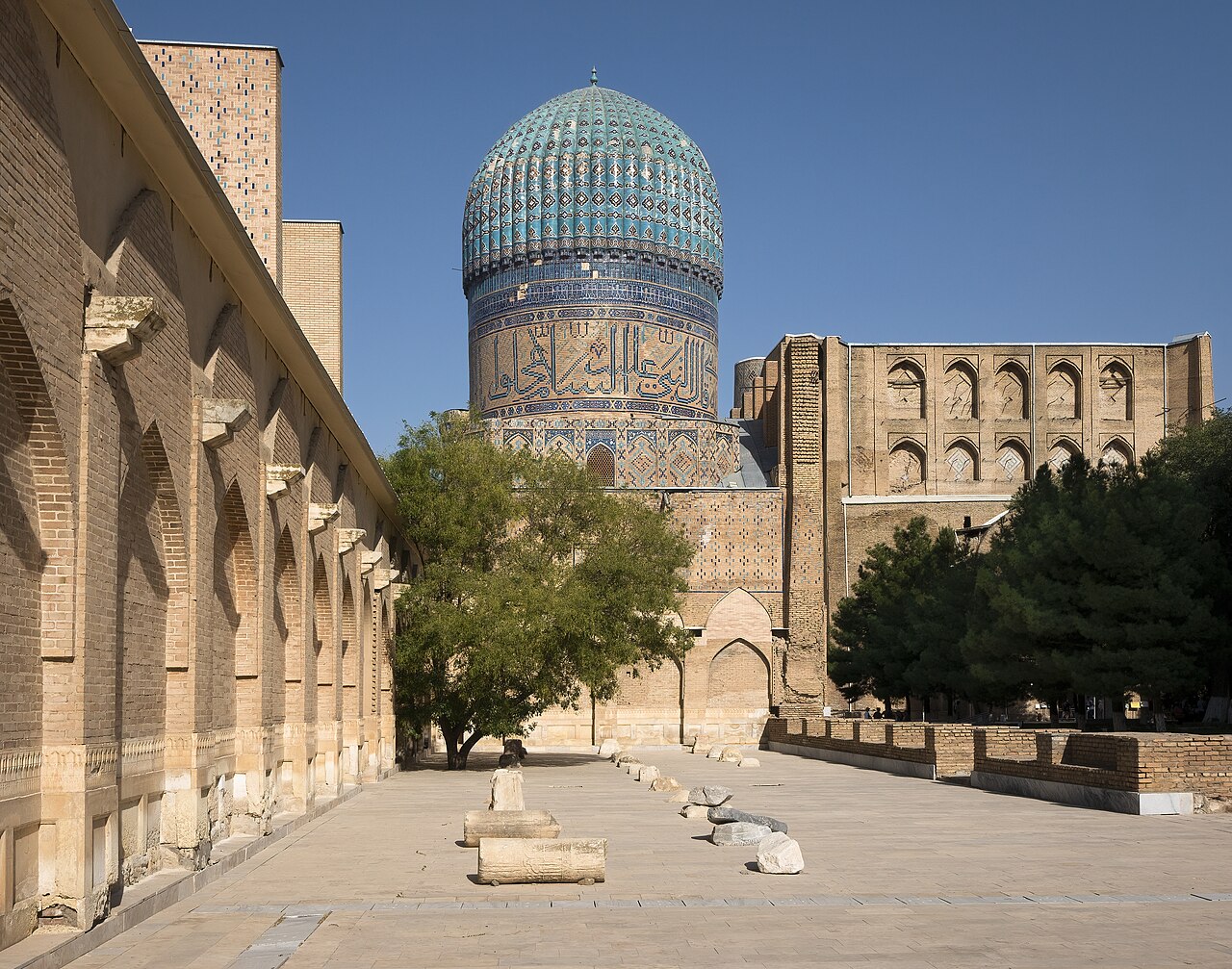
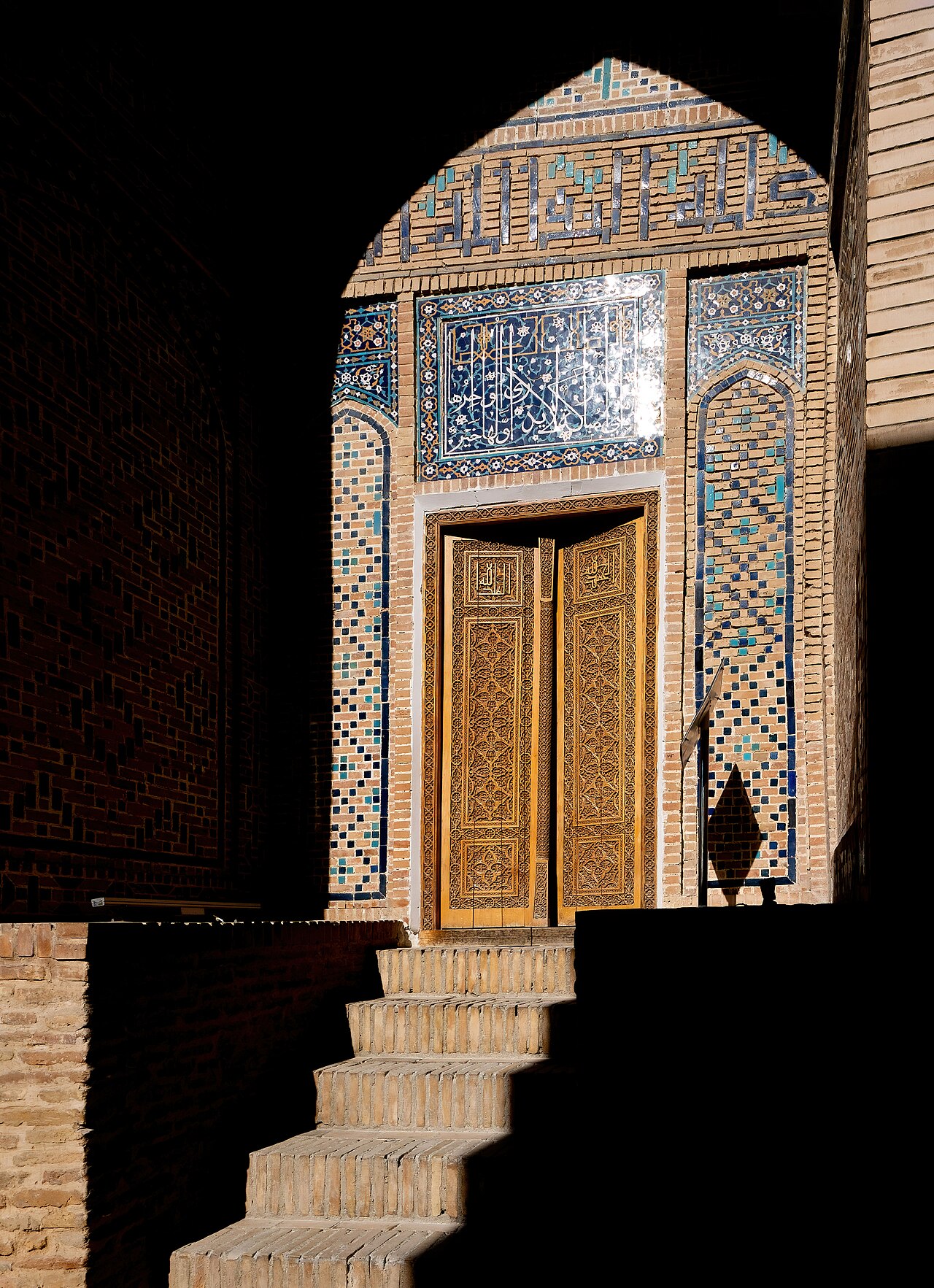
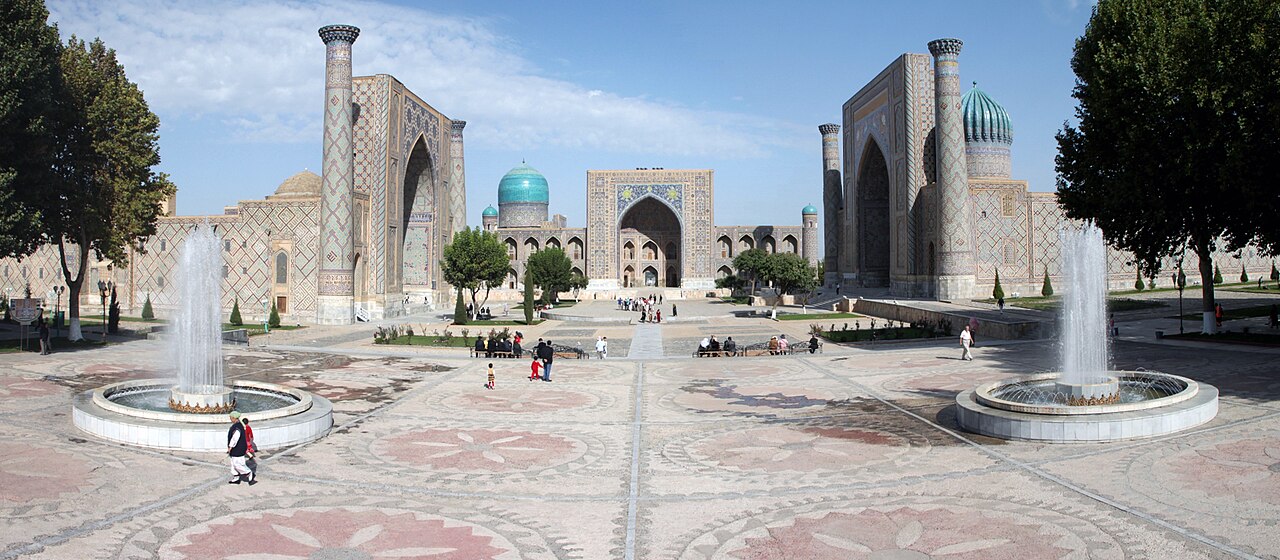
Registan developed as a central space of Samarkand's urban life, bringing commerce, government and learning into a shared architectural setting. Uzbekistan's tourism authority explains that the name refers to a sandy place and was used for central squares in several cities of the region. Under Timur, the square was an important trading area; under Ulugh Beg its official role became more pronounced. Its mosques and madrasas belong to the wider historic city recognized by UNESCO, where religious education and monumental patronage helped shape influential forms of Islamic architecture. The decorated surfaces should therefore be approached as the work of makers within a particular urban history, not as evidence of an independently measured energetic system. For this atlas, the square offers a place to consider how scholarship, public life and visual order meet. Contemporary contemplative readings remain separately attributed alongside that historical account.