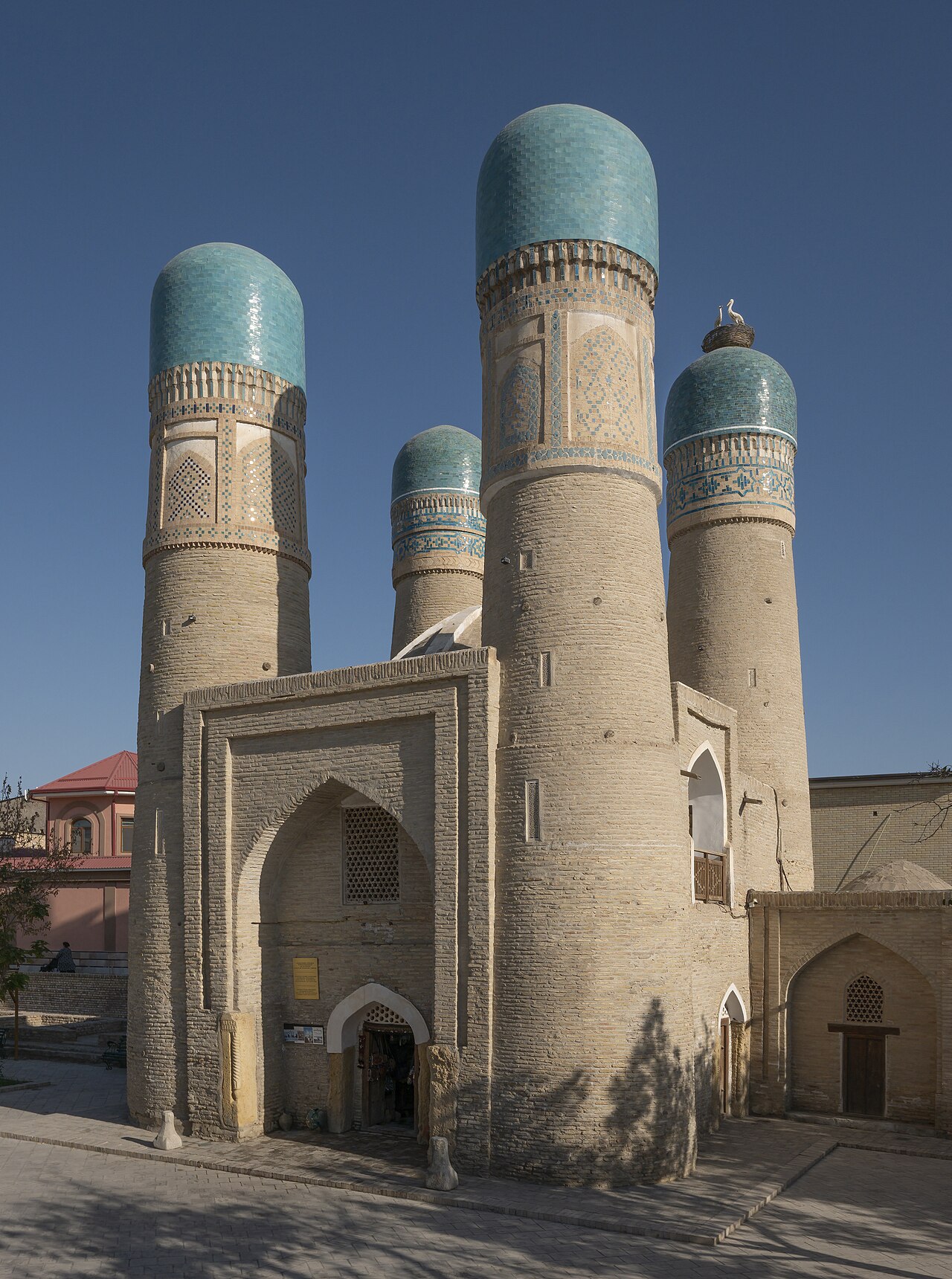
Chor Minor takes its familiar name from the four towers rising at the corners of its distinctive gateway. Built in 1807 for a madrasa associated with Khalifa Niyazqul, it represents a more intimate scale of Bukhara's religious architecture than the city's grand congregational ensembles. The official architectural description places the gateway within a complex that included a courtyard, student cells and a mosque. Its upper room served as a library, linking the memorable exterior with the practical work of study. Glazed decoration and domed tower tops give the surviving structure a particularly recognizable silhouette. Those features are best understood in relation to the educational setting that once surrounded them. The atlas introduces Chor Minor through that institutional history rather than assigning unverified meanings to each tower. Its small scale opens a useful perspective on how learning and worship also occupied neighborhood spaces within the historic city.
Place & context
Living use
It is visited as an architectural landmark and as part of Bukhara's sacred-heritage walking routes.
Place & context
Visiting with care
Consult the site’s official guidance before travel. Respect worship, photography restrictions and local custodians.
Approximate orientation; confirm locally before visiting
Presence · An optional practice
A moment with this place.
Read, listen, or simply pause. Begin wherever you are.
◎
Read about this place from wherever you are. Notice how the four towers orient your eye. Which details become visible when you look a second time? You may pause quietly and breathe naturally, without changing or holding your breath.
A contemporary editorial invitation, not a local ritual instruction. Participation is optional; stop if uncomfortable. Check local access and custodians’ guidance before a visit.
Further profile layers will be added as sources are reviewed.
Nearby & related places
Start in the same state or country, then explore shared traditions and themes. Map references help order the suggestions; they may represent communities rather than entrances.