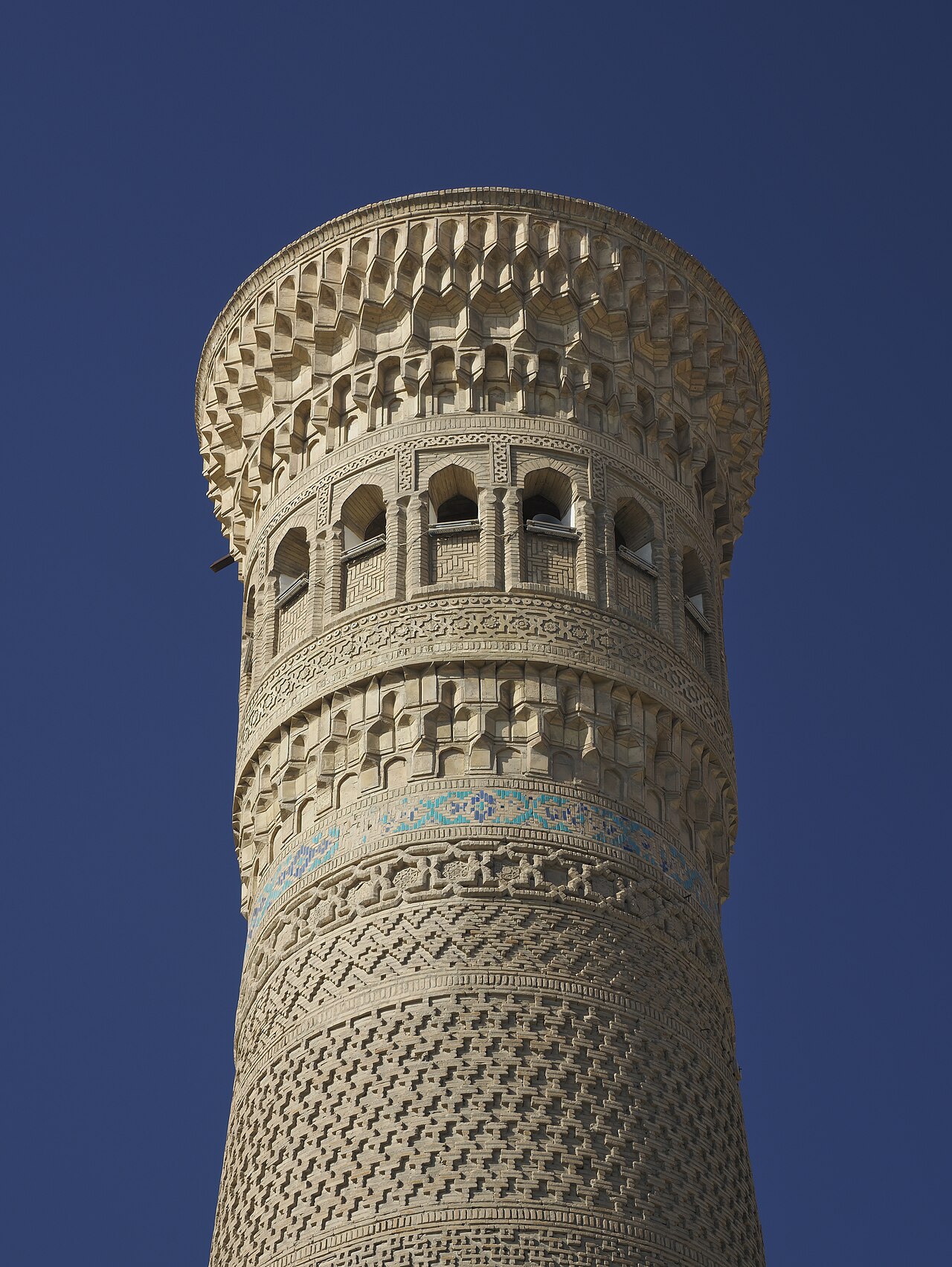
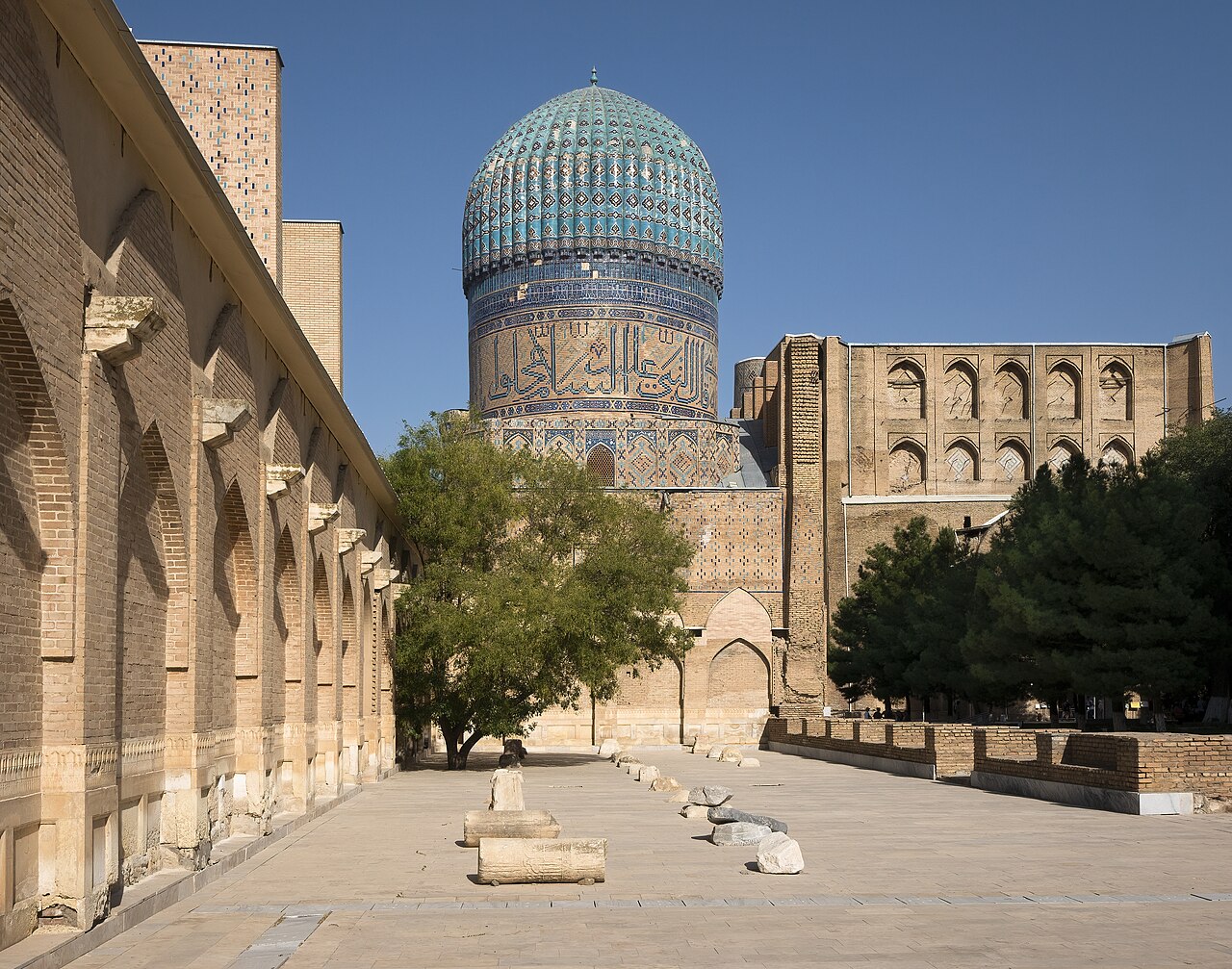
Po-i-Kalyan brings several generations of Bukhara's religious architecture into one prominent urban ensemble. The surviving minaret and the adjoining mosque and madrasas reflect a history of construction and rebuilding extending across the medieval and early modern city. Uzbekistan's tourism authority traces the ensemble's principal development from the twelfth to sixteenth centuries, with the later mosque and Miri-Arab madrasa helping establish its familiar form. A congregational mosque and a place of religious study have different functions, yet their proximity makes the relationship between worship and education visible. The minaret provides a vertical landmark through which the surrounding buildings are understood. This is a useful place to consider Bukhara as a city sustained by institutions and communities, as well as by celebrated teachers. Its sacred significance comes from those histories of prayer, learning and patronage, which should remain distinct from contemporary speculative readings of architectural geometry.
Place & context
Living use
The complex is visited for prayer, study, heritage, architecture, photography, and orientation inside old Bukhara.
Place & context
Visiting with care
Consult the site’s official guidance before travel. Respect worship, photography restrictions and local custodians.
Approximate orientation; confirm locally before visiting
Presence · An optional practice
A moment with this place.
Read, listen, or simply pause. Begin wherever you are.
◎
Read about this place from wherever you are. Consider the relationship between the minaret, mosque and madrasa. How do learning and worship share a landscape? You may pause quietly and breathe naturally, without changing or holding your breath.
A contemporary editorial invitation, not a local ritual instruction. Participation is optional; stop if uncomfortable. Check local access and custodians’ guidance before a visit.
Further profile layers will be added as sources are reviewed.
Nearby & related places
Start in the same state or country, then explore shared traditions and themes. Map references help order the suggestions; they may represent communities rather than entrances.