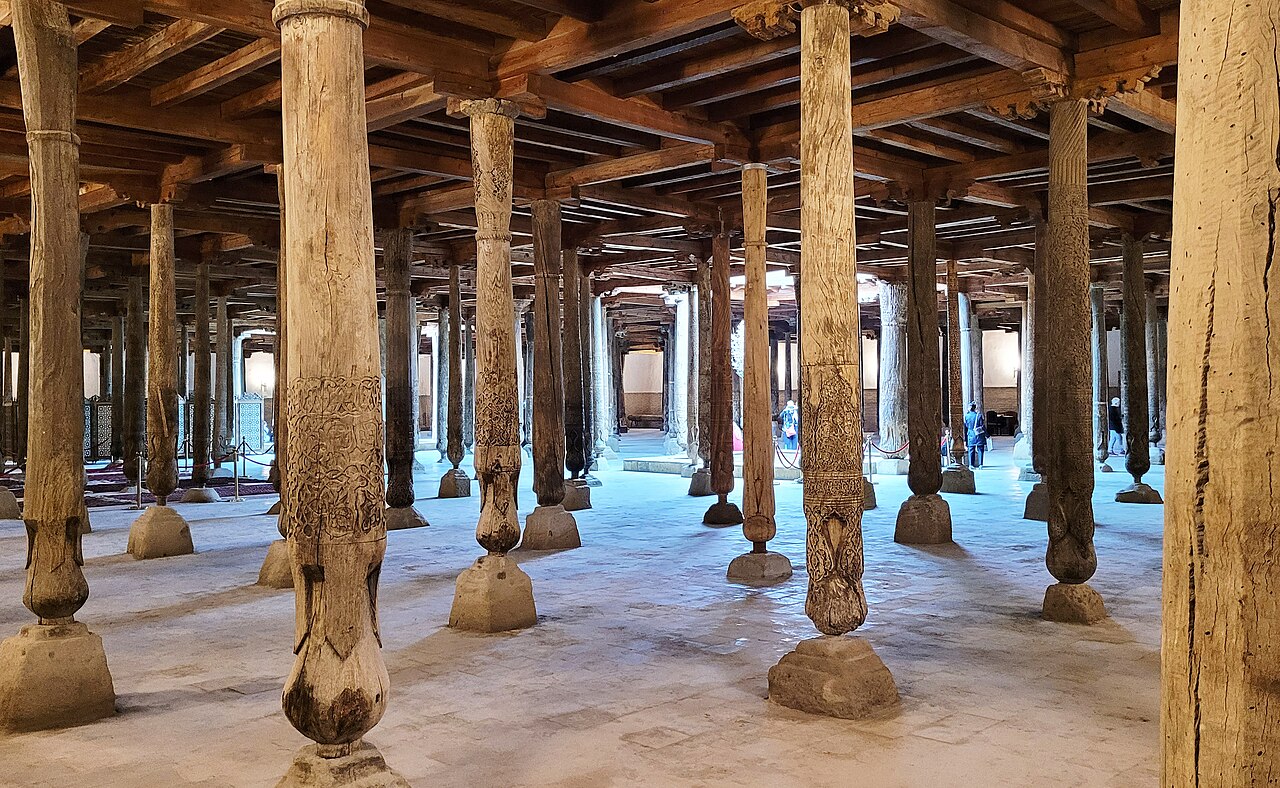
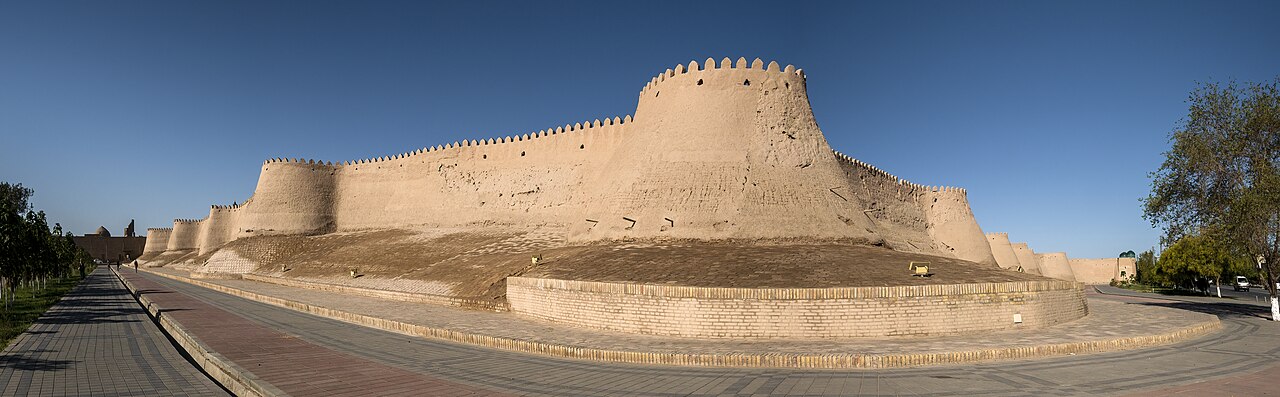
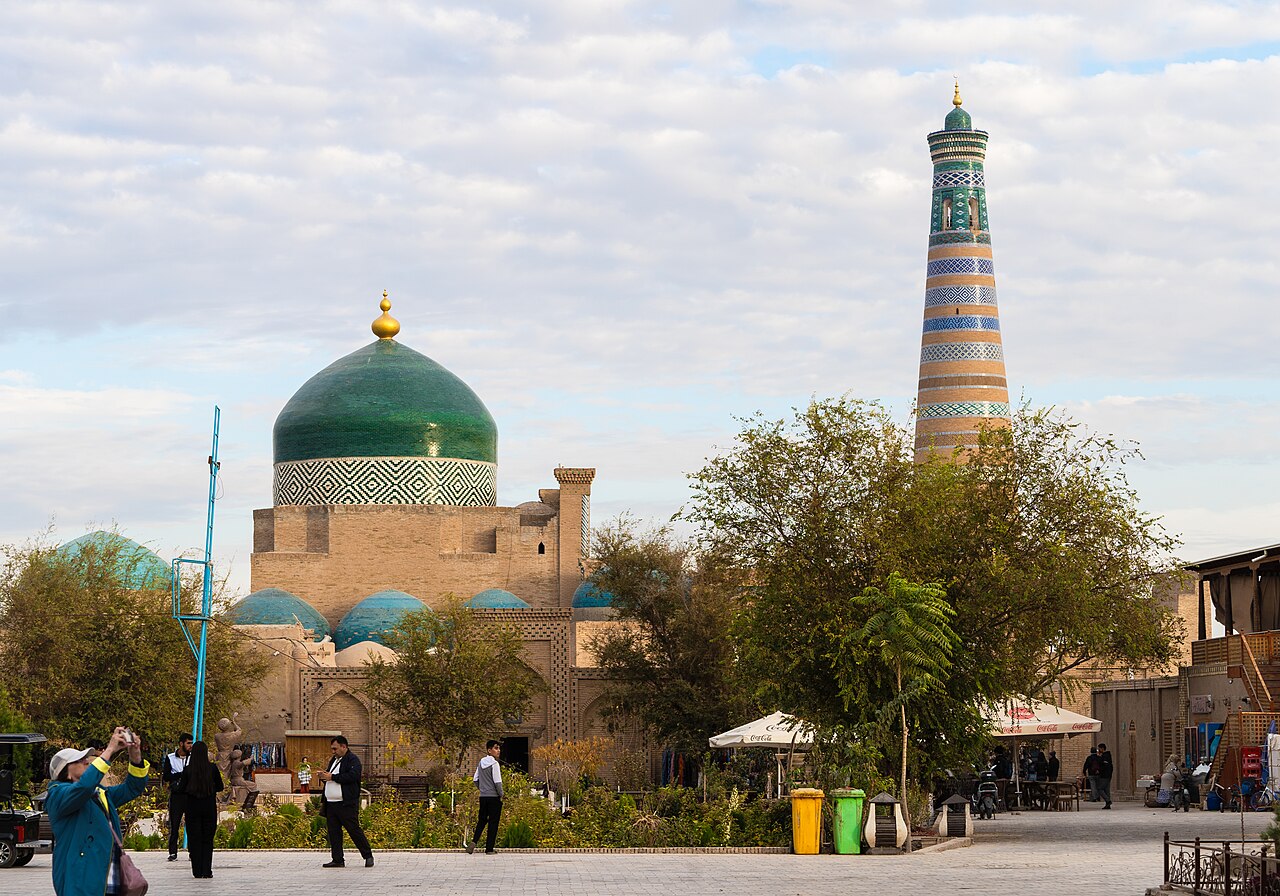
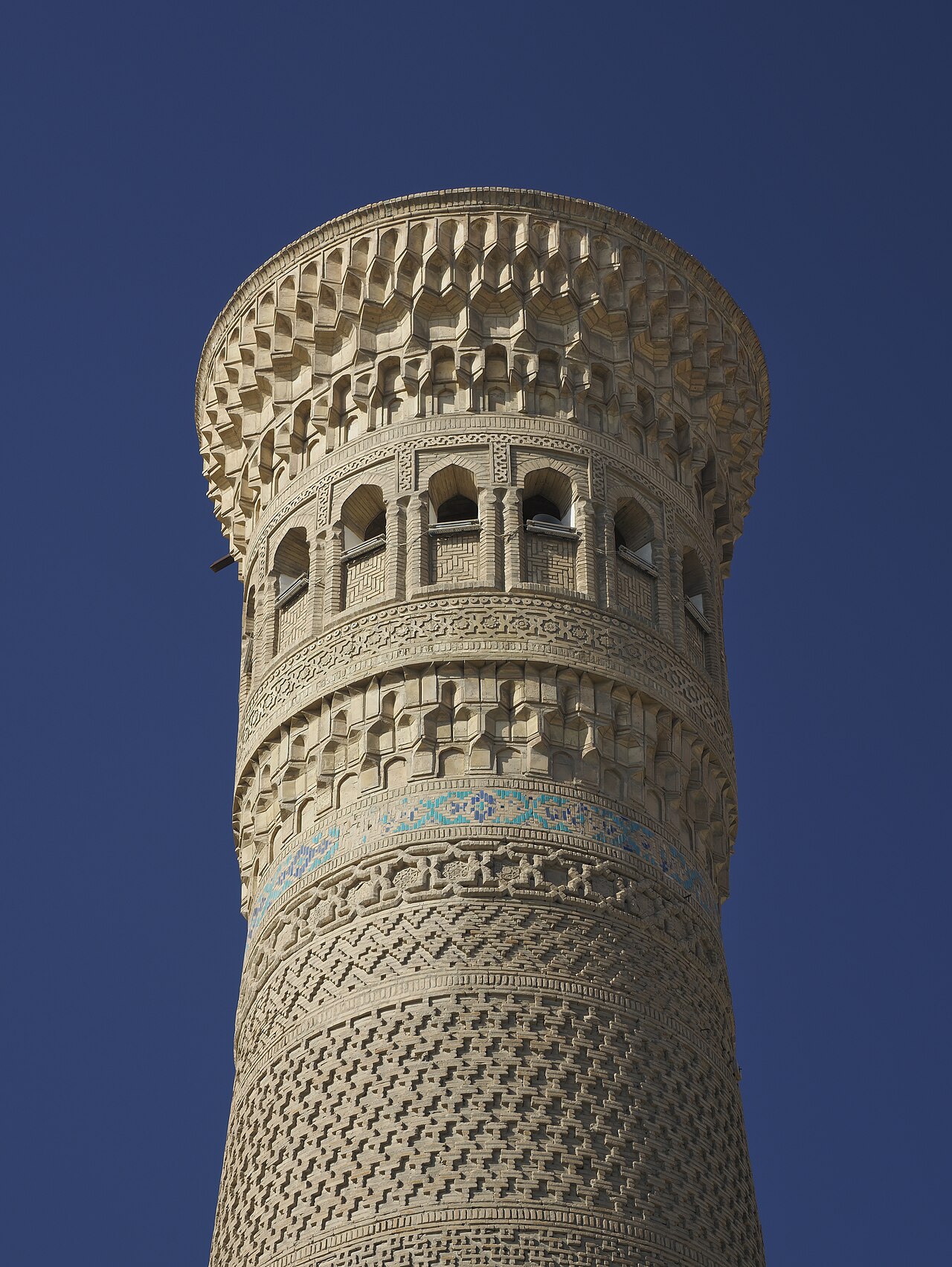
Khiva's Juma Mosque invites attention through its interior forest of carved wooden columns. More than two hundred supports organize the prayer hall, creating a different spatial experience from the monumental courtyards and tiled portals often associated with Central Asian religious architecture. Official tourism descriptions give different levels of chronology: the general Khiva guide connects the mosque with a tenth-century origin, while the Ramadan guide describes the standing mosque as eighteenth century. These statements should not be flattened into a claim that the entire present building survives unchanged from the earlier date. The columns and the rebuilding history belong to a longer story of maintenance and religious use within Itchan Kala. As a Friday mosque, the building also points toward collective worship and the city's social life. Its significance emerges through material craftsmanship, repeated renewal and its relationship with the surrounding urban fabric.
Place & context
Living use
It is experienced as a mosque, heritage monument, and contemplative architectural space.
Place & context
Visiting with care
Consult the site’s official guidance before travel. Respect worship, photography restrictions and local custodians.
Historic mosque with earlier column traditions and later rebuilding
Location precision
Approximate orientation; confirm locally before visiting
Presence · An optional practice
A moment with this place.
Read, listen, or simply pause. Begin wherever you are.
◎
Read about this place from wherever you are. Notice the repeated columns in the photographs. How does repetition change the way you look at a space? You may pause quietly and breathe naturally, without changing or holding your breath.
A contemporary editorial invitation, not a local ritual instruction. Participation is optional; stop if uncomfortable. Check local access and custodians’ guidance before a visit.
Further profile layers will be added as sources are reviewed.
Nearby & related places
Start in the same state or country, then explore shared traditions and themes. Map references help order the suggestions; they may represent communities rather than entrances.