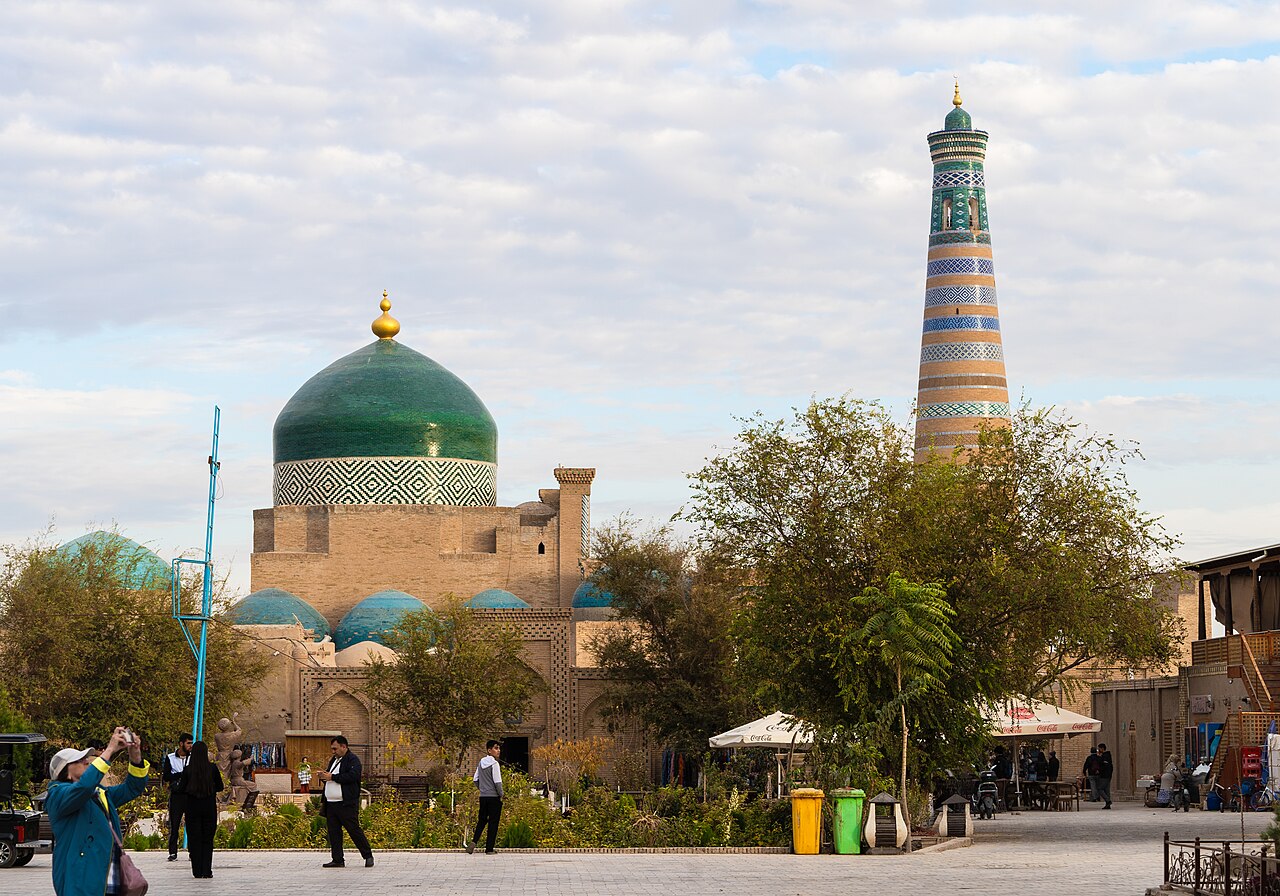
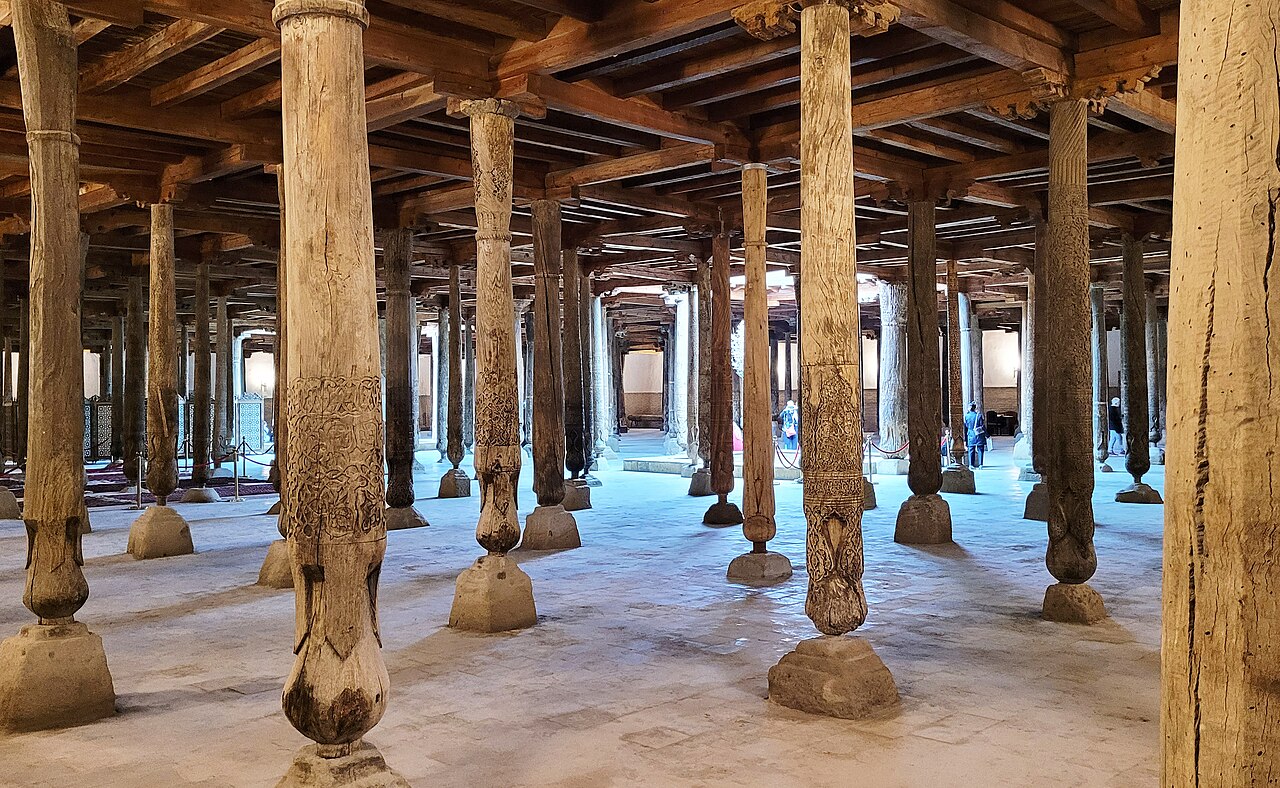
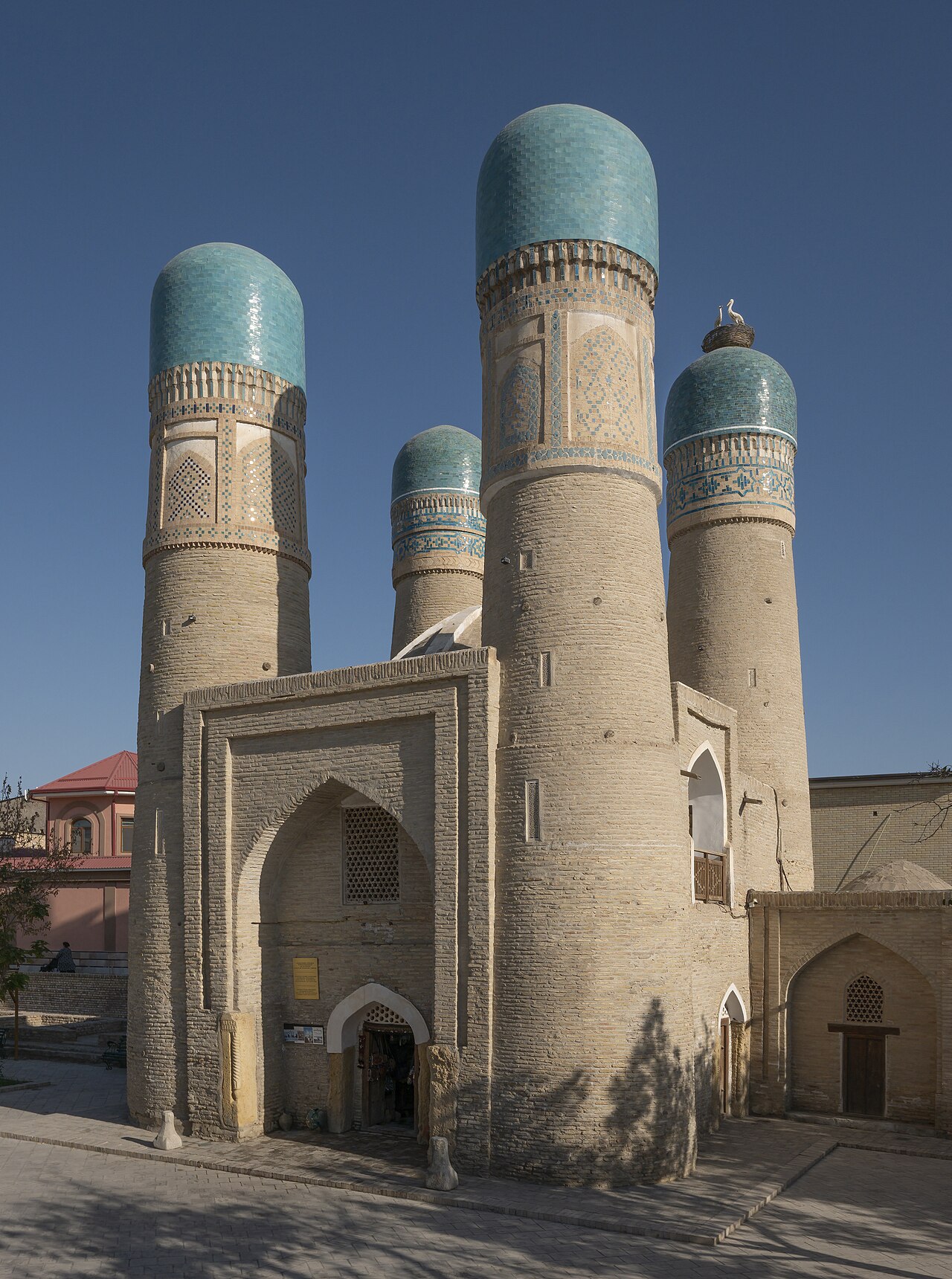
Pahlavon Mahmud's memorial complex grew around the grave of a figure remembered in Khiva as a poet, Sufi and wrestler. Uzbekistan's official account dates his life to 1247–1326 and describes a reputation that joined physical strength with learning and ethical reflection. Those aspects of his memory help explain why the shrine's significance extends beyond the biography of a single religious teacher. The architectural complex developed much later, through additions between the seventeenth and early twentieth centuries. Its domed spaces give a monumental form to a tradition of remembrance that preceded the surviving buildings. The interval between the remembered life and the later construction matters: a shrine preserves devotion through changing materials and patronage rather than presenting an untouched medieval scene. In this atlas, Mahmud's poetry and Sufi associations provide a starting point for deeper reading, while stories of his exceptional feats remain part of his remembered reputation.
Place & context
Living use
The site is visited for prayer, local reverence, cultural memory, and architectural beauty.
Place & context
Visiting with care
Consult the site’s official guidance before travel. Respect worship, photography restrictions and local custodians.
Core shrine tradition with later architectural expansions
Location precision
Approximate orientation; confirm locally before visiting
Presence · An optional practice
A moment with this place.
Read, listen, or simply pause. Begin wherever you are.
◎
Read about this place from wherever you are. Reflect on the themes of strength, humility and service in this place’s story. Which of them holds your attention? You may pause quietly and breathe naturally, without changing or holding your breath.
A contemporary editorial invitation, not a local ritual instruction. Participation is optional; stop if uncomfortable. Check local access and custodians’ guidance before a visit.
Further profile layers will be added as sources are reviewed.
Nearby & related places
Start in the same state or country, then explore shared traditions and themes. Map references help order the suggestions; they may represent communities rather than entrances.