Ahrar’s legacy links teaching with the practical responsibilities of public life. The library follows his relationships with rulers, landholding and religious institutions alongside his spiritual authority. His career makes it difficult to describe Sufi history as a withdrawal from society alone.
Place & context
Living use
A place of religious memory and worship. Local custodians and the community define appropriate conduct.
Place & context
Visiting with care
Check local custodians’ guidance before travel. Give worshippers space and ask before photography.
Ahrar’s legacy links teaching with the practical responsibilities of public life. The library follows his relationships with rulers, landholding and religious institutions alongside his spiritual authority. His career makes it difficult to describe Sufi history as a withdrawal from society alone.
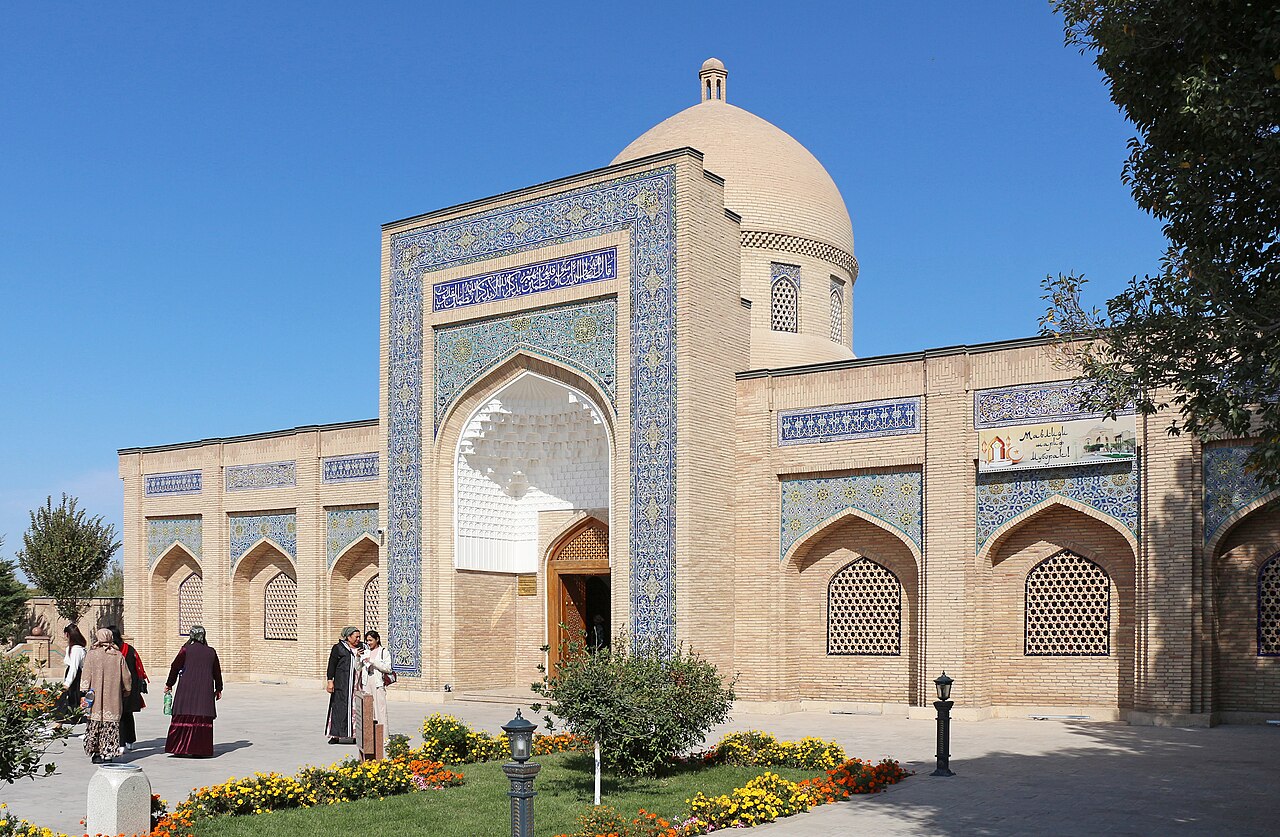
This Tashkent mosque is a place associated with Ahrar’s patronage; it is not his burial place in Samarkand. The distinction matters on a map. His letters and the documentary tradition offer a different kind of evidence from later stories about a saint, and are a promising route for further reading.
Reading notes & evidence
Historical association, devotional memory and documentary evidence are distinguished.
Khwajagan–Naqshbandi research dossier, reviewed October 2026.
Tradition
Islamic worship; Naqshbandi patronage
Period
Medieval association; later buildings
Location precision
Tashkent region · Regional reference. Rounded orientation point; not an entrance or tomb position.
Presence · An optional practice
A moment with this place.
Read, listen, or simply pause. Begin wherever you are.
◎
Read the place’s story and notice one detail you would like to understand better. Consider the people who care for it. You may pause quietly and breathe naturally.
A contemporary editorial invitation, not a local ritual instruction. Participation is optional; stop if uncomfortable. Check local access and custodians’ guidance before a visit.
Further profile layers will be added as sources are reviewed.
Nearby & related places
Start in the same state or country, then explore shared traditions and themes. Map references help order the suggestions; they may represent communities rather than entrances.